Irish Tourism Embraces AI for Personalised Visits
Irish Tourism Sector Embraces AI Agents for Hyper-Personalised Visitor Experiences
Ireland's vibrant tourism sector is rapidly embracing advanced AI agents to deliver increasingly hyper-personalised visitor experiences, with key industry bodies setting ambitious targets and launching initiatives to accelerate adoption. This strategic shift is driven by a growing demand from travellers already leveraging AI for trip planning, promising to reshape how tourists discover and engage with the Emerald Isle, from bustling city breaks to the most serene rural landscapes.
The Rise of AI in Travel Planning
A recent report by Tourism Ireland highlights the significant momentum behind AI in travel research. The research found that a notable 16% of potential overseas visitors are now using AI as their primary tool for travel planning and research, marking a substantial 7 percentage point increase year over year. More than one in three prospective visitors have already experimented with AI for their travel preparations, indicating a clear and growing preference for AI-assisted trip design.
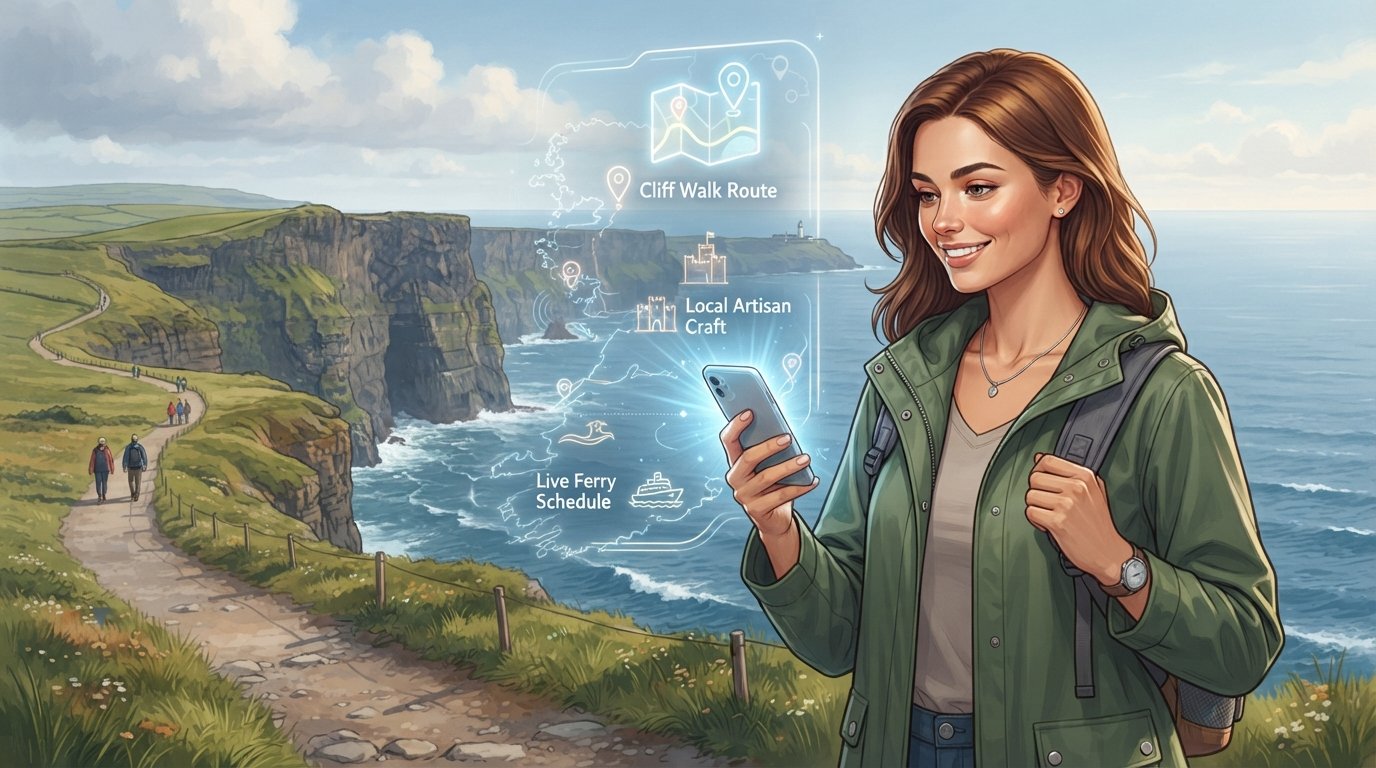
This evolving trend points towards a future where generic searches are replaced by sophisticated, agent-like itinerary creation. Travellers are no longer just asking "what to see in Ireland" but are describing intricate constraints – such as a preference for coastal walks, a desire for fresh seafood, an interest in small, historic towns, and a wish for minimal driving. AI agents are proving adept at assembling tailored itineraries that seamlessly integrate accommodation, attractions, restaurants, and transport, all customised to individual preferences. This represents a significant leap forward in AI agents for research and summarization, moving beyond simple data retrieval to active, bespoke planning.
National Strategy and Support for Small Businesses
Recognising this transformative potential, Fáilte Ireland has embedded explicit digital and AI targets into its 2026–2029 strategy. The national tourism development authority aims for an impressive 90% digital adoption and 25% AI adoption among tourism businesses by 2030. These targets are complemented by a goal of 7% annual visitor growth in less-developed tourism areas, signaling a clear intention to use technology to drive sustainable and distributed tourism across Ireland.
Crucially, the focus on AI adoption extends directly to the backbone of Ireland's tourism industry: small and medium-sized enterprises (SMEs). The Irish Tourism Industry Confederation (ITIC) has solidified this commitment through a new partnership with OpenAI, establishing a dedicated “Tourism Academy.” This initiative will provide essential AI training and upskilling opportunities specifically tailored for tourism SMEs, helping them understand how to use AI agents for business effectively.
For Irish home businesses and smaller operators, this academy is a vital step towards integrating ai workflow tools for small teams ireland and leveraging ai agents for small business automation. It empowers them to implement solutions like no-code ai agents for small business, making advanced technology accessible without needing deep technical expertise.
Decentralising Tourism with AI Recommendations
One of the most exciting prospects of this AI revolution is its potential to benefit smaller Irish destinations and rural communities. By generating highly personalised recommendations, AI can steer visitors towards hidden gems, local food experiences, scenic trails, and lesser-known attractions based purely on personal interests rather than traditional popularity. This capability supports a more geographically distributed tourism model, alleviating pressure on over-touristed spots and channeling economic benefits into more rural areas of the country.
A tangible example of this innovation is already underway: Sligo tourism recently launched a new AI-powered itinerary planner. While specific details on its full capabilities are still emerging, this local deployment underscores the practical application of AI in enhancing visitor experiences and promoting regional attractions. Such tools exemplify the growing demand for ai agent software for business owners looking to innovate and differentiate their offerings.
The Future of Personalised Irish Journeys
The movement towards AI-powered tourism in Ireland signifies a profound shift from one-size-fits-all travel to uniquely tailored adventures. The integration of personal ai assistant for productivity into the tourism sector promises not only to streamline planning for visitors but also to unlock new avenues for growth and sustainability for Irish businesses. From our Dublin office, we observe how these ai solutions are setting a new standard for visitor engagement.
While the full rollout of fully autonomous AI agents by every Irish tourism SME is still developing, the foundational steps are firmly in place. Training initiatives like the ITIC Tourism Academy, alongside ambitious national targets, are paving the way for widespread adoption. The emphasis is on practical, easy-to-implement tools that provide real value, much like the custom AI workflow development services we provide. Businesses are increasingly seeking affordable ai agents for small businesses that can enhance operations without requiring significant recurring ai agent subscription ireland fees, such as our OpenClaw managed implementation service which offers a one-time setup fee.
For Irish businesses eager to tap into this transformative trend and enhance their visitor offerings with intelligent automation, understanding and implementing ai agents for workflow automation examples is crucial. AISolutionsIreland, based in our Dublin office, specialises in designing and delivering custom AI agents and automated workflows specifically for Irish businesses. We offer solutions like document-trained customer support chatbots, AI for marketing, and managed AI agent services, all tailored to fit how you work and supported personally. Explore how our custom AI solutions can help your business thrive in this new era of hyper-personalised tourism.